
What Financial Steps Might Tech Professionals Take in September?
How is it September already?
Fortunately, we still have a third of the year left!
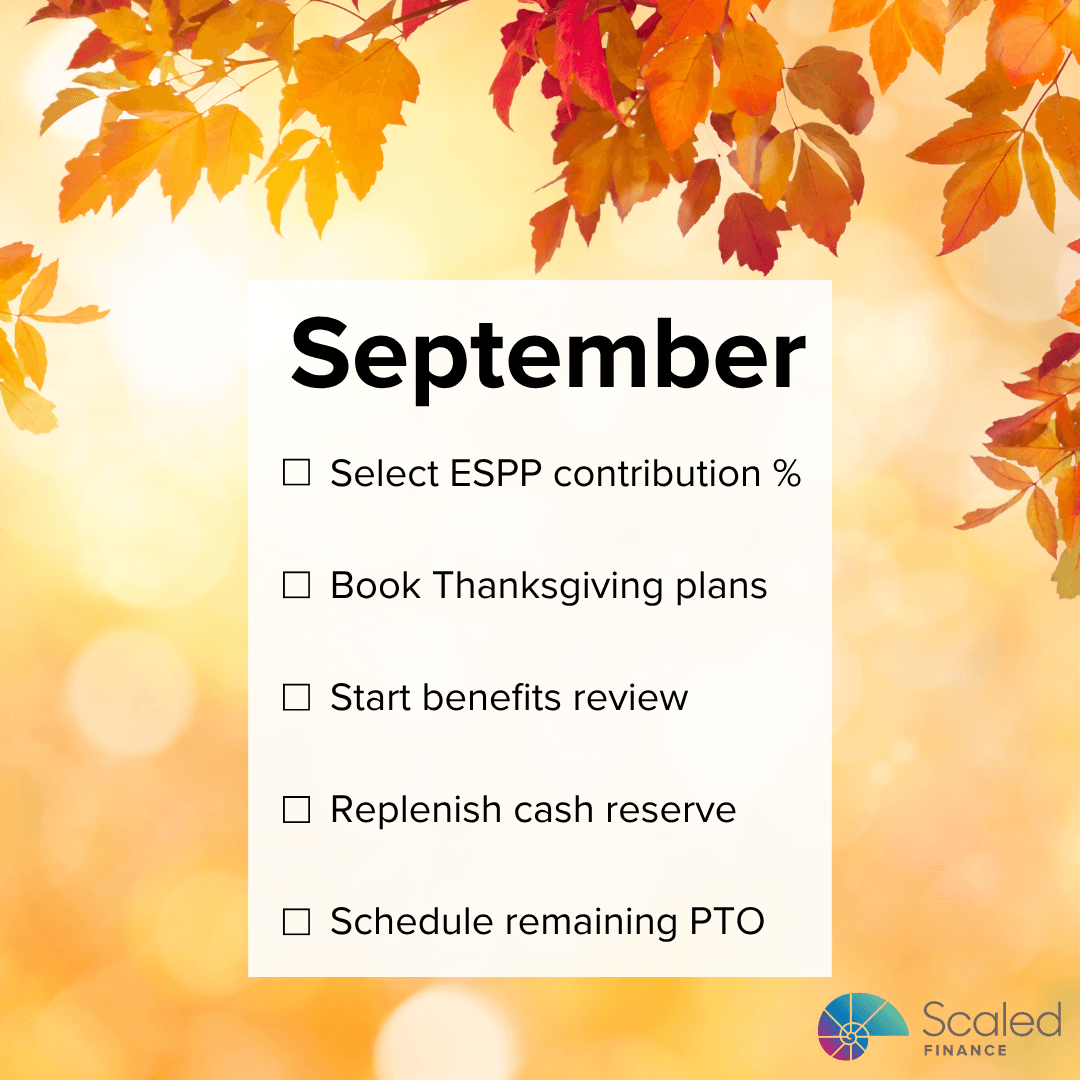
September Financial Steps
Potential steps tech employees might take in September include:
Select ESPP contribution %
Book Thanksgiving plans
Start benefits review
Replenish cash reserve
Schedule remaining PTO
1. Select ESPP Contribution %
Participating in an Employee Stock Purchase Plan (ESPP) isn’t right for everyone. Nonetheless, it’s worth considering.
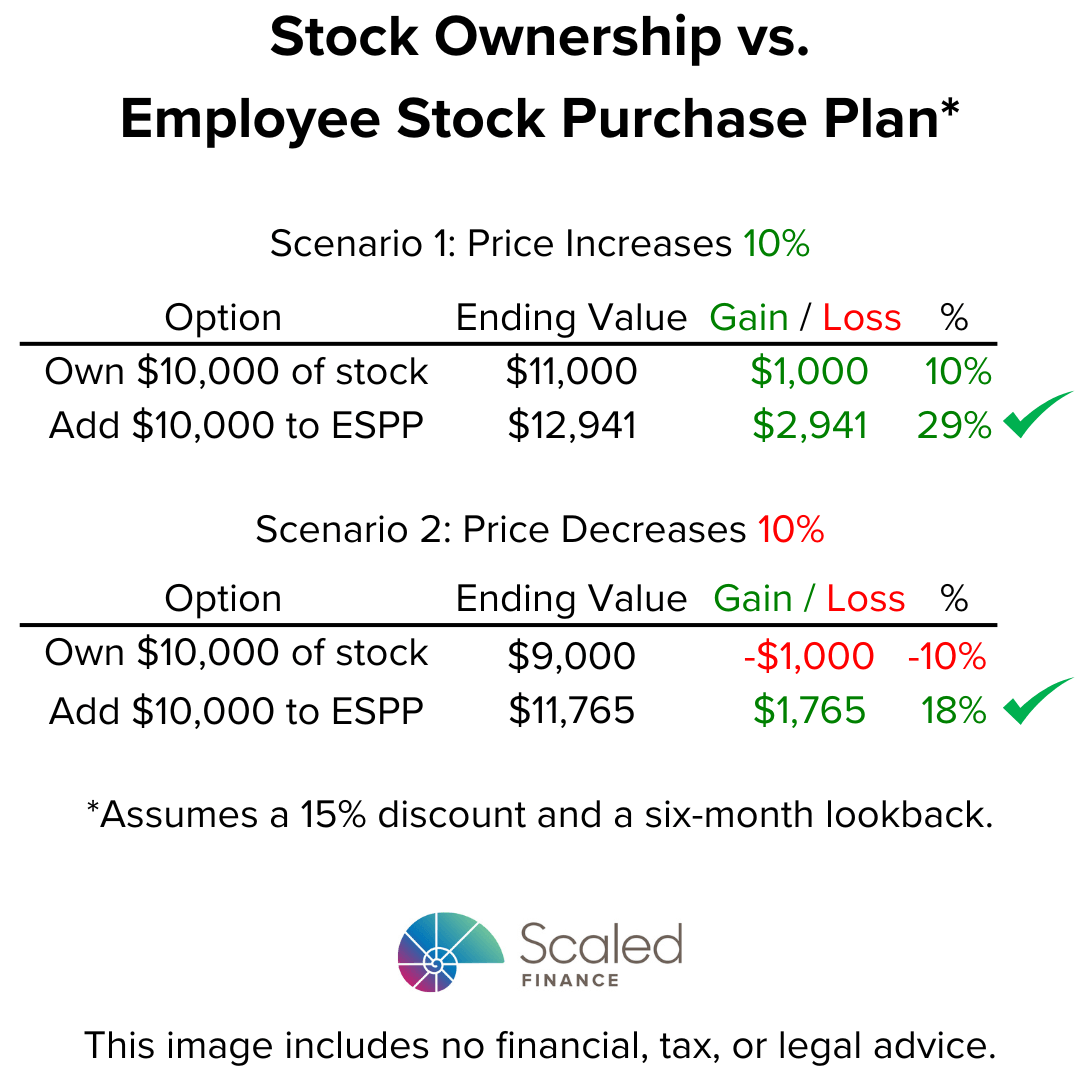
The primary benefit may be a 15% discount off the lower of the price at the beginning and end of six months.
Let’s say a stock’s price is $200.
If the stock stays the same over six months, it would be purchased at $170 and have a built-in $30 gain.
If the stock price rises to $220, it would be still purchased at $170 and have a larger built-in $50 gain.
If the stock price falls to $180, it would be purchased at $153 and have a smaller built-in $27 gain.
Disadvantages
Some disadvantages of participating in an Employee Stock Purchase Plan include that it:
reduces cash flow,
locks up money (usually until purchase), and
increases taxes - especially if shares are sold right away.
What If I’m Laid Off?
Unfortunately, layoffs are a constant threat at tech companies. There’s both bad and good news.
Bad news: a participant no longer employed on the purchase date misses the opportunity to buy at a discount.
Good news: the participant will instead get the cash back. It’s almost like a small - yet growing! - emergency fund.
For more, check out:
Own Stock or Contribute to ESPP?
2. Book Thanksgiving Plans
It’s important to plan ahead for Thanksgiving travel:
Hotels and short-term rentals fill up, especially at popular locations.
Last-minute flights are normally more expensive.
People get busy.
Avoid the drama. 🎭 Book now.

3. Start Benefits Review
Open enrollment starts soon! Now’s a good time to check your benefits.
Are you expecting any major expenses?
This year: If you’ve already met your health insurance deductible, it may make sense to pull forward healthcare expenses into 2026.
Next year: You may need to increase your coverage to pay for higher upcoming expenses.
Do you have “use it or lose it” funds?
FSA = Flexible Spending Account. Funds need to be used in 2026. (There’s a possible $680 carryover)
HRA = Healthcare Reimbursement Arrangement. Funds may also need to be used in 2026, though it depends on the plan.
HSA = Health Savings Account. Funds are NOT “use it or lose it” and don’t to be spent this year.
If you currently have a large FSA or HRA balance, would it make sense to reduce your contribution with open enrollment?
For more, check out
4. Replenish Cash Reserve
Huzzah for all you did this summer!
Those activities may have shrunk your cash reserve. Now could be a good time to top it off before the holidays.
Restricted Stock Units
RSUs may vest more than once a year, which is good news. Many employees just had some stock vest! Those shares might fund a cash reserve.
For more, check out:
Is It Worth Holding Employer Stock?
Social Security Maximum
Reaching the Social Security income maximum of $184,500 for 2026 might also help! About 6% of covered workers earn more than the Social Security taxable income each year.

5. Schedule Remaining PTO
“Use it or lose it” doesn’t just apply to spending and reimbursement accounts.
Paid Time Off (PTO) is there for a reason. Use it!
Employees might roll over up to two weeks (80 hours). However, that limit can fluctuate. At T-Mobile, it was:
as low as 40 hours and
as high as 120 hours (COVID-19, merger).
Play it safe and plan to carry over no more than 40-80 hours.
Scheduling PTO early also helps avoid scheduling conflicts with teammates. Call dibs!

Hey, thanks for reading my post on potential financial steps for tech professionals in September.
Just a reminder, I share a lot of resources that may help you.
Join the newsletter and get the white paper:
Personal Finance for Tech Professionals
Disclaimer
In addition to the usual disclaimers, neither this post nor these images include any financial, tax, or legal advice.