
Update Your Accomplishments

Overview
The best thing for your money might have nothing to do with investments. However, it may still involve taking stock! 😆
Now’s a good time to review - and document - what you did in 2025.
You might earn a bigger raise or bonus!
Updating your accomplishments may help you:
shape your story,
set your direction, and
expand your options.
1. Shape Your Story
Raises occur in February at many companies.
Schedule
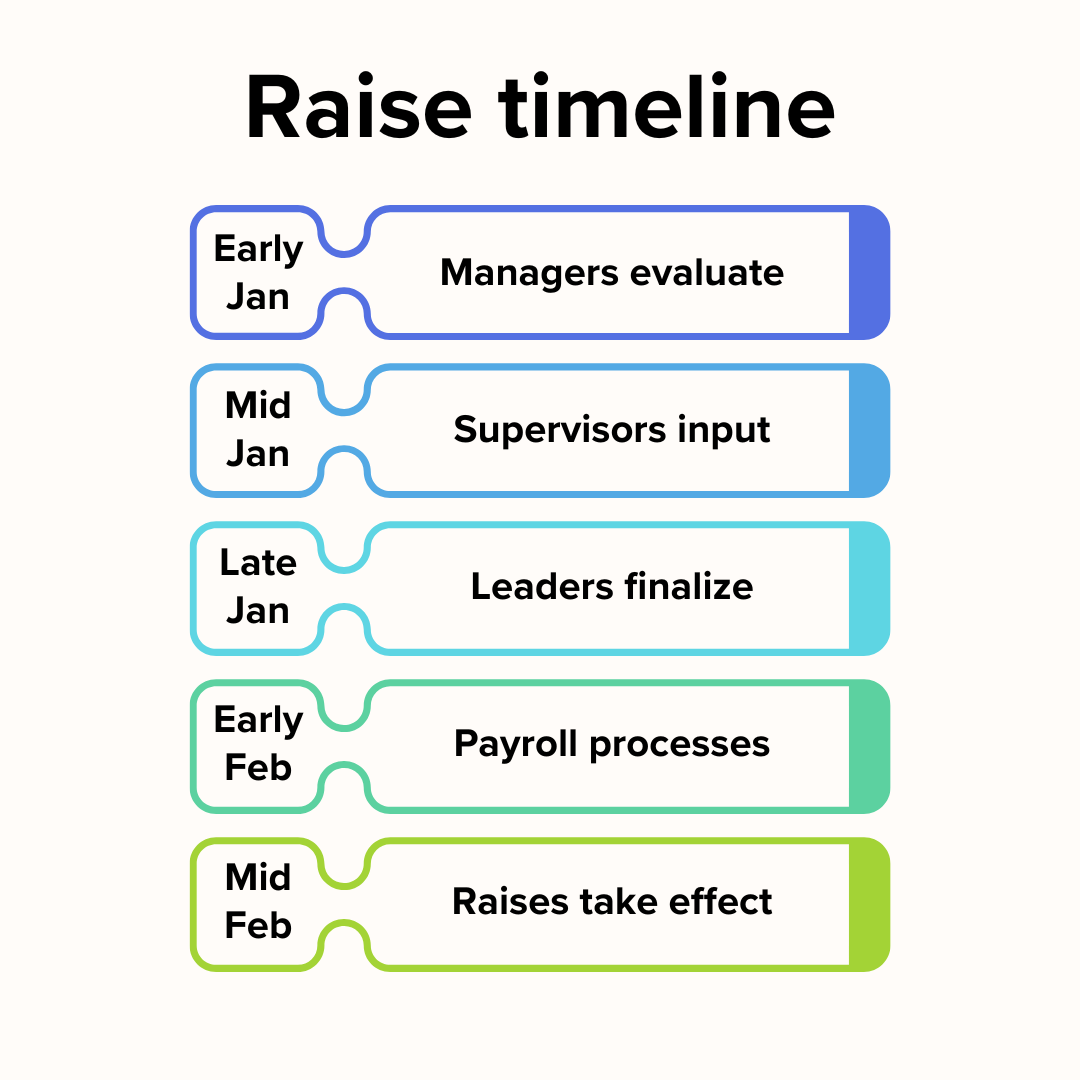
If raises go live in the middle of February, that likely means:
Early January: managers evaluate teammate performance,
Middle of January: supervisors input the raises,
End of January: leaders finalize raises, and
Early February: Payroll processes the raises.
An employee may be able to influence the decision early in the year. However, they need a point of view soon!
Document
Your accomplishments can:
lead conversations with your manager and
go on your resume or CV.
List
Consider summarizing what you did this year. You don’t have to send it to your supervisor - though I often did.
Simply creating the list can clarify your thoughts!
Questions
What were your projects this year?
Are they complete?
How did they go?
Be objective - share both positives and negatives.
Initiative
Goal setting and performance reviews can be formal.
Self-evaluations may have more impact when reviews are optional. Creating them shows initiative!
Support
Your supervisor’s perspective may differ from yours.
Expect to be challenged! Prepare responses to objections.
Share results. Demonstrate your impact - and how you achieved it.

Resume
Some managers ask direct reports to update their resume each year.
This practice:
ensures they’re updated regularly,
documents key results, and
levels the playing field for everyone on the team.
It’s a good idea to refresh your resume at least once a year.
The best time is in the moment:
Memories fade.
Coworkers move.
Data disappear.
I love to see numbers on a resume! It takes extra care to track the impact.
Progress
A little effort can go a long way.
Extension
Even a challenging project has bright spots.
Amplifying that success or applying it to other areas may be quick wins.
Start
Any progress is better than a goose egg!
The work may be easier than you think.
Also, circumstances change:
A new tool, process, or team may have come online.
A fresh approach might unlock hidden value.
Lessons
Documentation is important when things go well.
However, it can be even more important when they don’t!
Why wasn’t something completed?
Is there anything that can be done about it?
To err is human.
Supervisors are more likely to overlook a setback if an employee:
learned from it and
won’t repeat the same mistake.
Also, a key insight could make the whole exercise worthwhile!
2. Set Your Direction
Reviews can also serve as a guide.
Projects
Consider your work:
What did you like most?
What was your least favorite?
Why?
You may be able to systematically improve your job satisfaction by doing:
more of what you like and
less of what you don’t.

Your boss isn’t a mind-reader! Let them know what you enjoyed, and why.
They may send you similar work or responsibilities.
People
Repeat the process for coworkers:
Who did you like most?
Who was challenging?
However, handle with care. Focus on how much you enjoyed working with your favorite people. Try not to speak ill of anyone.
If asked what you think about someone you don’t like, consider the sandwich approach:
mention a positive,
share a negative, and
add another positive.
Skills
Also consider your skillset.
Did a knowledge gap slow you down?
Is there anything you’d like to learn?
How might you develop new skills?
3. Expand Your Options
A review can also help you know and grow your opportunities.
Alignment
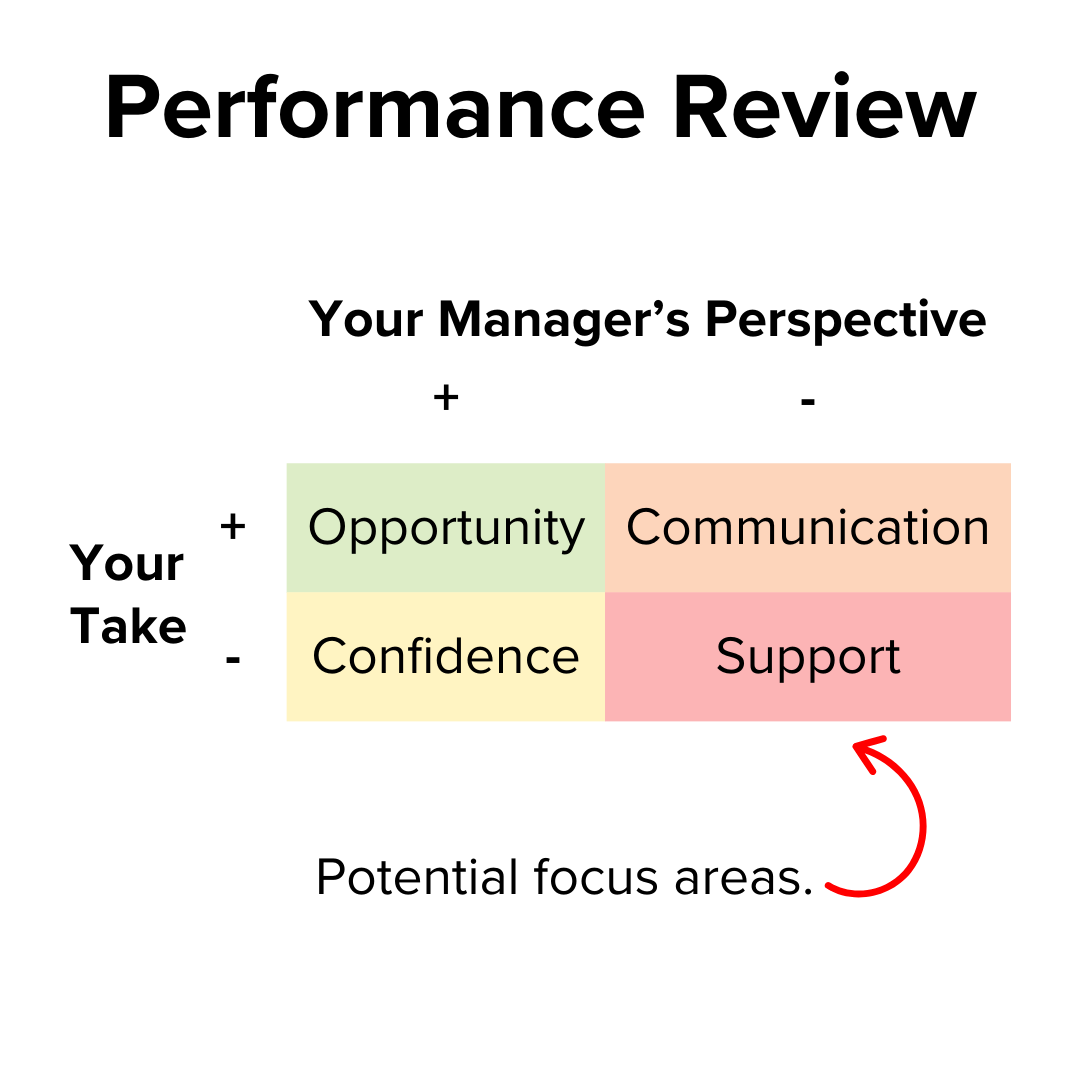
You likely have a point of view on your performance.
Sharing it with your manager can be informative.
Both Positive
If you feel you did well and your manager agrees, that’s great!
Discuss next steps:
Where would you like to take your career?
Does your supervisor have suggestions on how to get there?
Both Negative
If you and your manager agree that your performance was less than stellar, consider why!
Do you lack resources, support, or training?
How can you get back on track?
Positive Surprise
Your manager may be pleased with your performance even if you feel you struggled. If you, you may lack confidence.
It may help to:
Celebrate your wins - even journaling may help.
Reframe your setbacks - they’re growth opportunities.
Negative Surprise
You may find yourself in an unfortunate position. You might feel you did well, and your supervisor disagrees.
Run into the fire! It’s worth a conversation.
Share facts where possible. You might change their mind.
If every win you share is challenged or ignored, your relationship with your supervisor may be strained. Your career could be in jeopardy.
It may be time to consider a role with another team or company.
Change
Change is the only constant.
According to EY, the average lifespan of an S&P 500® company is 15 years.
You may outlive your employer many times over!
Even before the company closes:
Layoffs are a constant threat.
An honest mistake may not be forgiven.
According to the U.S. Bureau of Labor Statistics, the average tenure of an employee with a company is about four (4) years.
Average time in a position is likely much shorter because of promotions, lateral moves, and demotions.
Even people who “retire” may find themselves:
working part-time,
serving on boards, or
consulting.
A current resume may ease career transitions.
Conclusion
Reviewing your accomplishments can impact your income. Few activities may earn as much per hour!
However, it’s not just about the raise. It’s also about making the most of your career. At the very least, it’s nice to know where you stand.
Hey, thanks for reading my article about updating your accomplishments!
Just a reminder, I share many resources that can help you.
Join the newsletter and get the white paper:
Personal Finance for Tech Professionals
Disclaimer
In addition to the usual disclaimers, neither this post nor these images include any financial, tax, or legal advice.